
Water is our most precious resource. Water sustains all live on Earth, and we can’t live without clean water.
The Guardians of the West Fork, WVU Water Research Institute, WV Department of Environmental Protection, and other partners have worked to improve water quality in the West Fork watershed for over two decades.
Acid mine drainage, or AMD, is an on-going threat to water quality in our watershed. AMD describes polluted water that seeps out from mines. During mining, water comes into contact and transports heavy metals such as iron, aluminum, and magnesium. The metals change the color of the water, oftentimes displaying orange, milky white, or aquamarine blue discoloration.
Treating AMD before it enters the West Fork mainstem is a high priority.
AMD remediation projects divert impaired water through a network of constructed wetlands to slow the flow, allowing suspended metals to drop out of the water and settle at the bottom of the pond.
How are these AMD projects constructed? Through partnership, planning, and volunteer efforts.
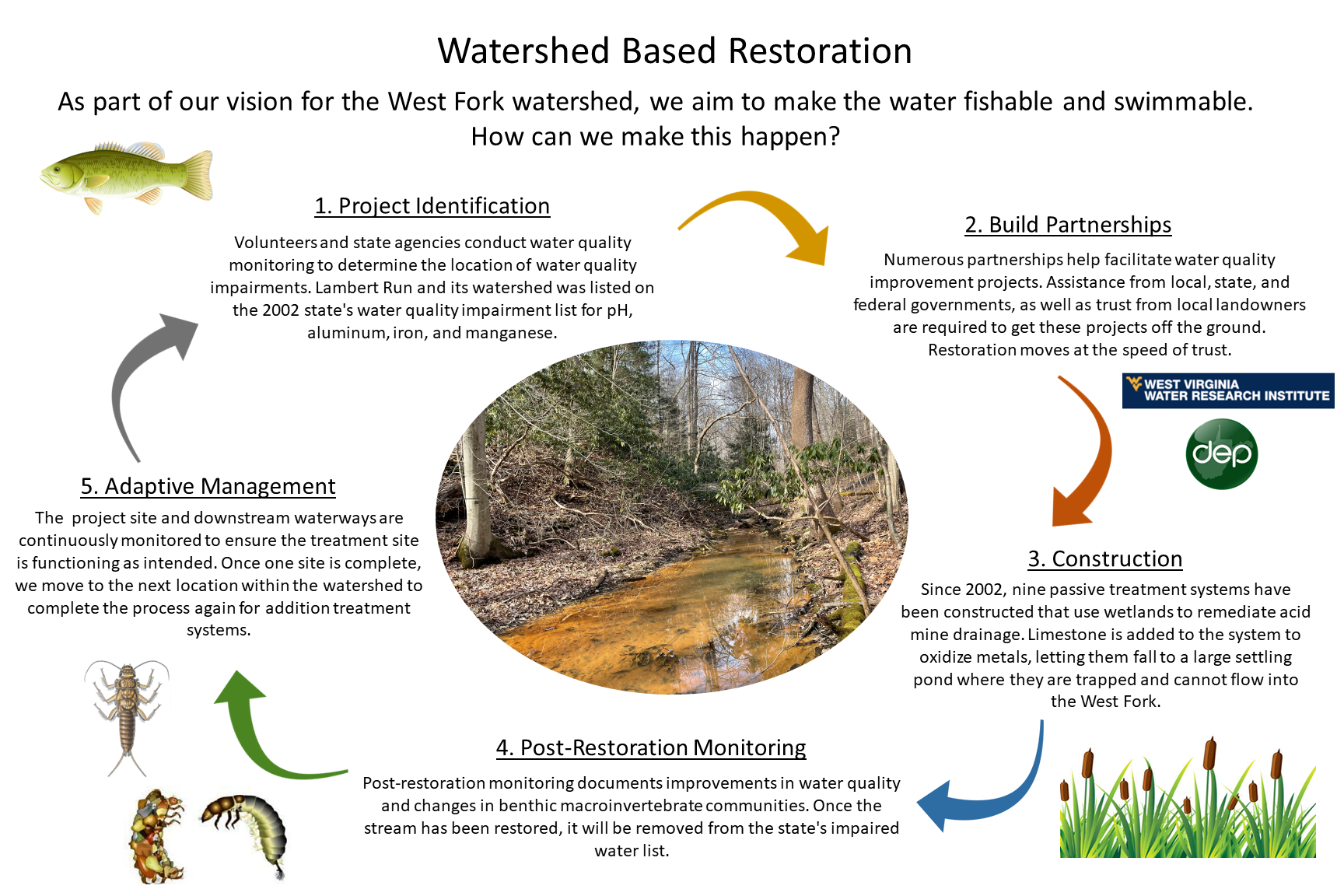
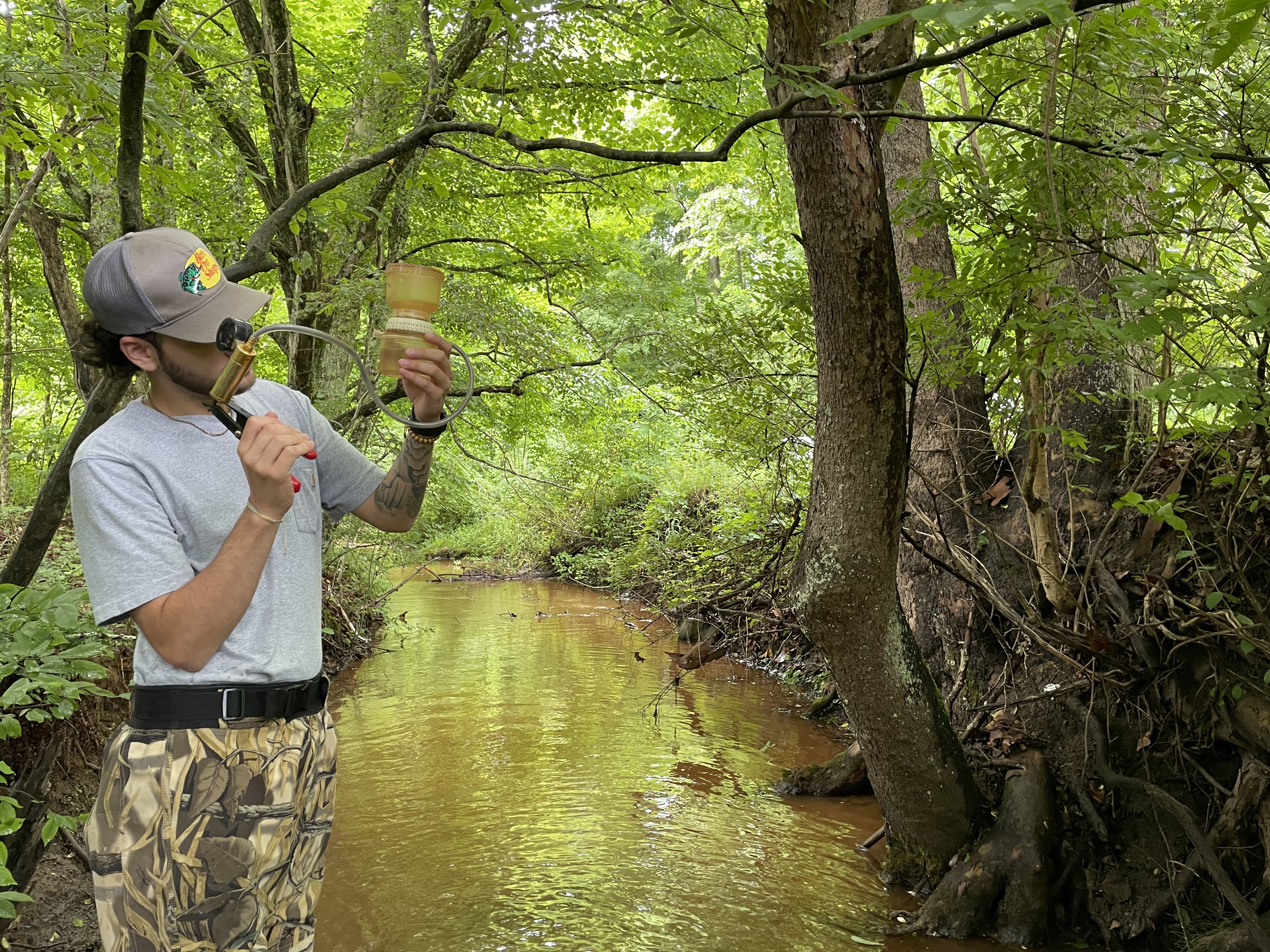
Identifying impaired streams require water samples to be collected and analyzed.
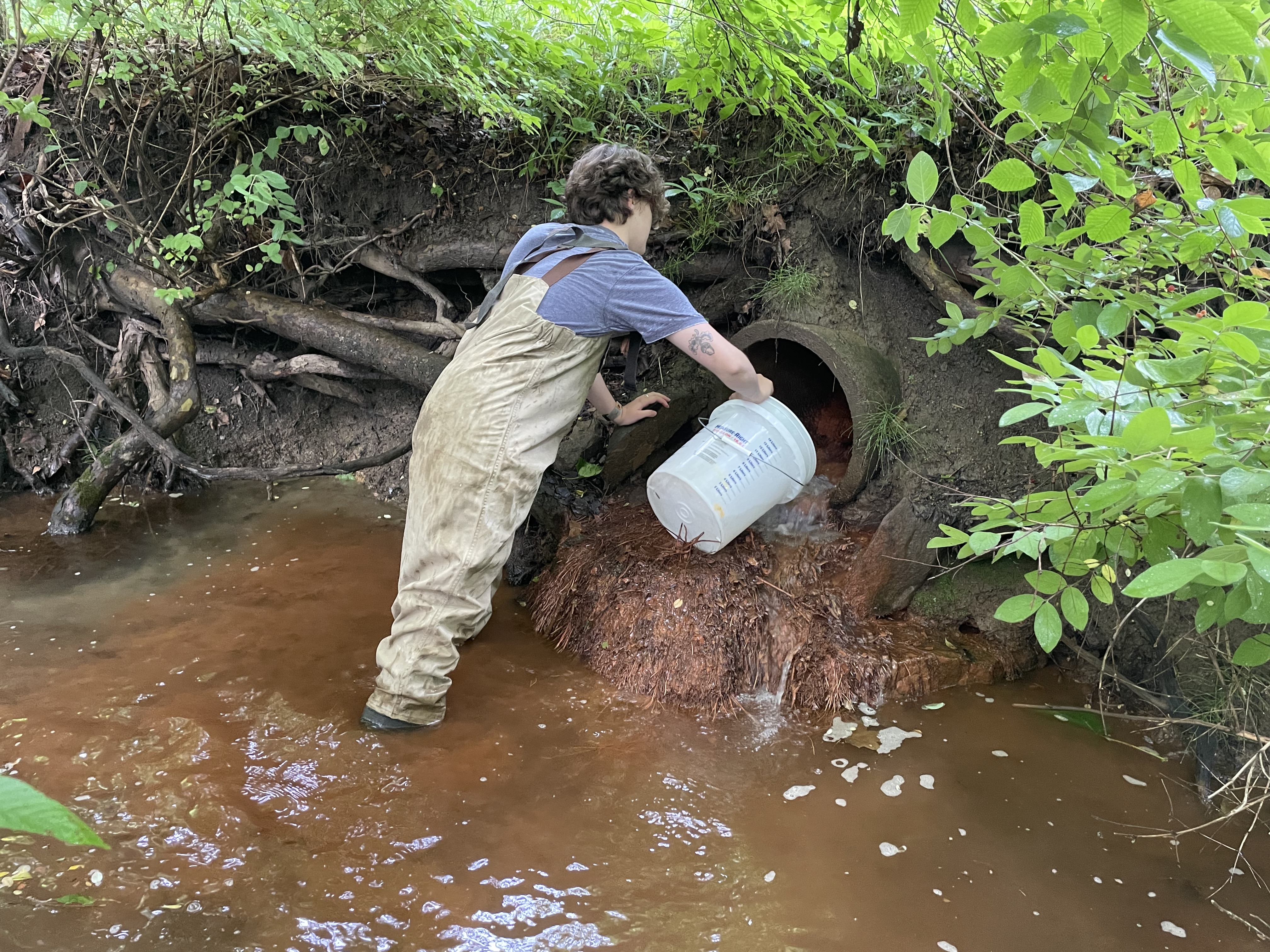
Field work also involves estimating the flow of the water. Knowing how fast the water flows allows us to estimate the impact of impaired waters within a watershed.
After identifying an impaired stream, our partner organizations work together to design, fund, and construct the project. After construction, these projects need post-restoration monitoring to ensure the wetland is functioning as intended.
The goal is to improve water quality so we can ensure the West Fork River remains fishable, swimmable, and drinkable for future generations.
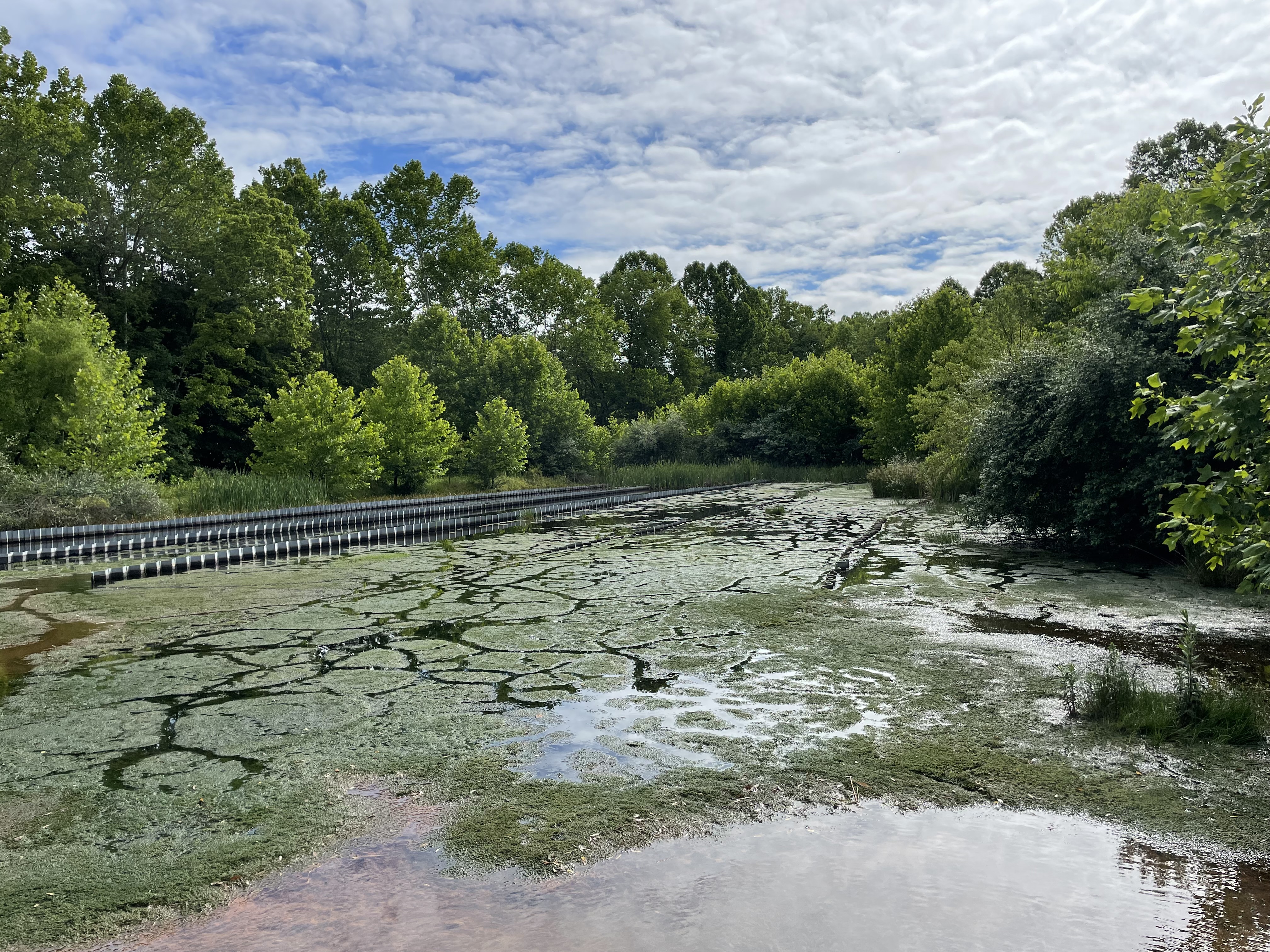
Thank you to our partners and volunteers for dedicating your time and energy to improving the water quality of West Fork.
By Jessica Bryzek
 Guardians of the West Fork Watershed