Join us from 10am to 4pm at Watters Smith State Park, Duck Creek Road, Lost Creek WV
Everyone is invited to bring a picnic lunch and spend the day, bring your mountain bikes and ride the trails, walk the trails or visit the Watters Smith farm museum. Drop in for the morning, the afternoon, or just one activity. Pre-registration is not required for any of the activities, but it will help with planning, and we are providing free box lunches for the first 50 people to register. Sign up here.
This year we will have live music from Escape Plan 79 and Maximums!
Activities will include:
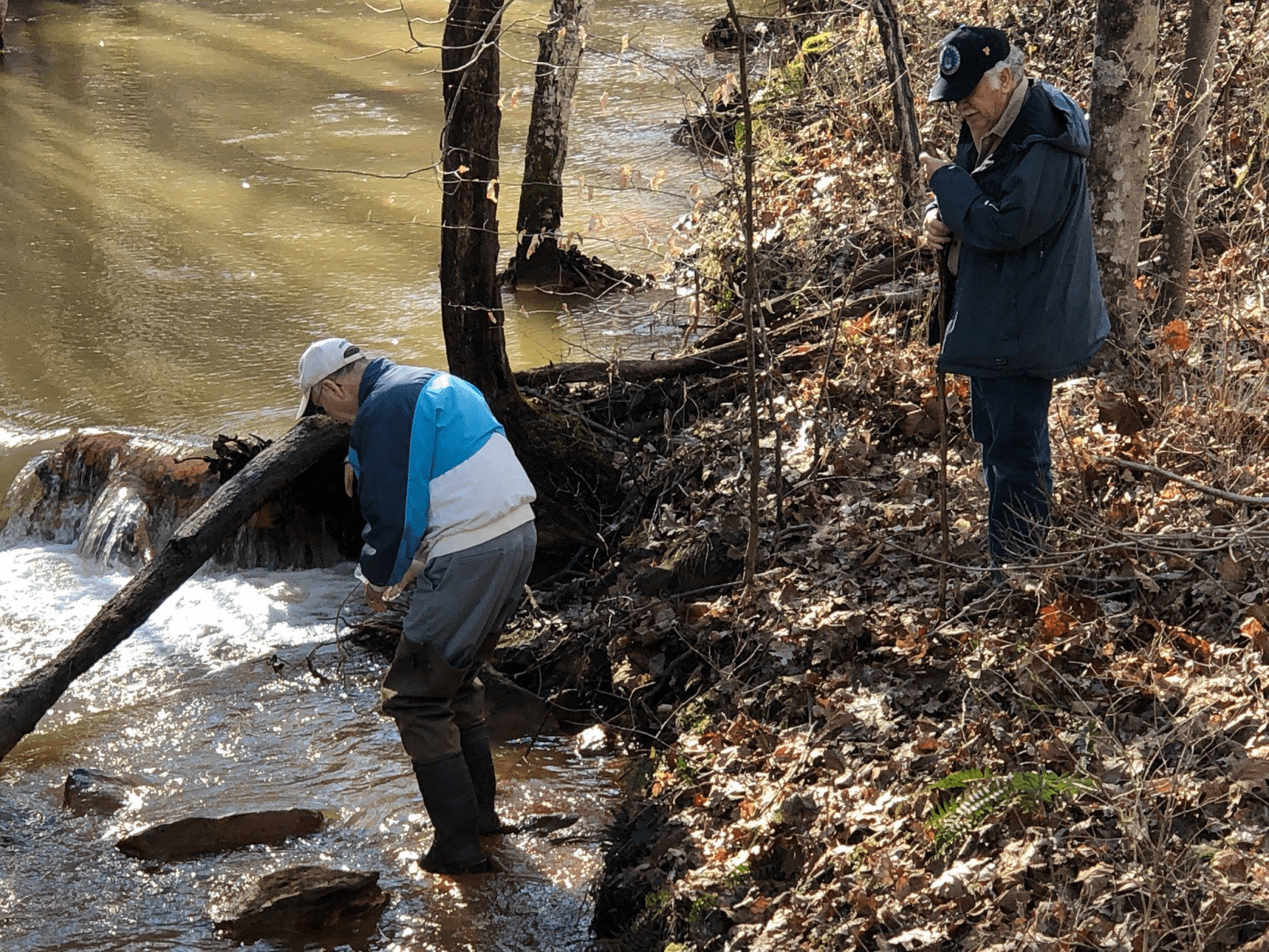
- Creek walks with WV Department of Environmental Protection staff to learn how stream health is determined, including demonstrations of water quality testing, checking for stream life, and evaluating stream banks.
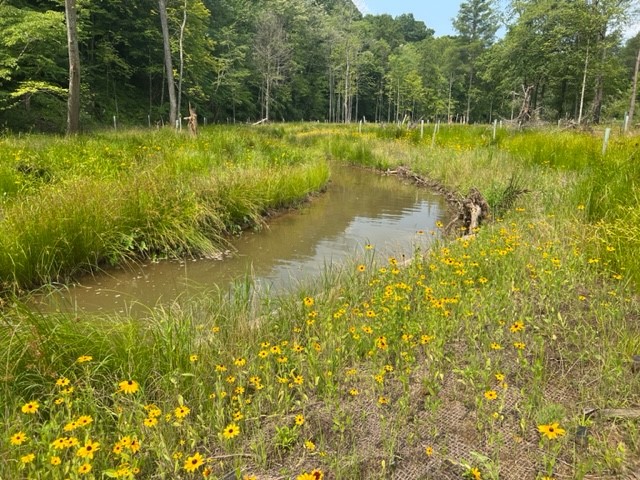
- Tours of the Duck Creek Mitigation Bank, a stream restoration project of WV Division of Natural Resources and Water and Land Solutions, which is an example of how landowners can restore their own creeks, prevent erosion, be resilient to flooding, build wildlife and pollinator habitat, and improve the river and watershed for everyone.
- Visiting the woods, or the creek with a local Master Naturalist or birder to learn about birds, bugs, beasts and plants.
- Nature crafts for kids
- Information tables on how watersheds work; programs to help you maintain healthy soil and water in your yard, farm, or rural property; septic tank maintenance; WVDEP REAP (WV DNR Rehabilitation Environmental Action Plan) – Adopt-A-Stream, Tire Collection, WV Make It Shine, how to report an open dump, and more.
- Information on the Watershed Champions Program – recognition for residents in the watershed who take steps to improve water quality and habitat in our watershed through actions they take in their own gardens, yards, and property.
- Private Lands Role in Conservation Presentation – WV DNR
This presentation, led by the West Virginia Division of Natural Resources, will highlight how private landowners play a critical role in protecting wildlife habitat, maintaining healthy ecosystems, and supporting long-term conservation goals. - Forestry for Wildlife Presentation– USDA/NRCS
The USDA Natural Resources Conservation Service will provide an overview of how forestry practices directly benefit wildlife populations and biodiversity. This session will explore the connections between forest health, land management, and wildlife habitat, while also introducing NRCS programs and resources that assist landowners in implementing sustainable forestry practices.
Guardians President Lisa deGruyter says “Many people, agencies, and organizations in our watershed work on keeping our water and watershed healthy. The Guardians work to get an overview of our watershed health and co-operate with everyone who is working on it. We hope this second Watershed Day will help people learn about the watershed and what they can do to help get and keep it healthy – and enjoy a day at our only state park.”
Watersheds are important because the surface water and stormwater runoff in a watershed drain to other bodies of water. Everything upstream ends up downstream. We all live downstream and our everyday activities can affect downstream waters – and our drinking water, fishing, swimming, and boating depend on a healthy watershed. The major problems in the West Fork and its creeks are pollution by fecal coliform from sewage and pastures, and iron in sediment from dirt roads, oil and gas drilling, urban runoff, farming, stream bank erosion, and abandoned mines.
The West Fork River Watershed includes all the land drained by the West Fork River and its creeks, from the mouth at Fairmont to near Rock Cave and covers 881 square miles – almost all of Harrison and Lewis Counties, and parts of Marion, Taylor, Barbour, and Upshur.
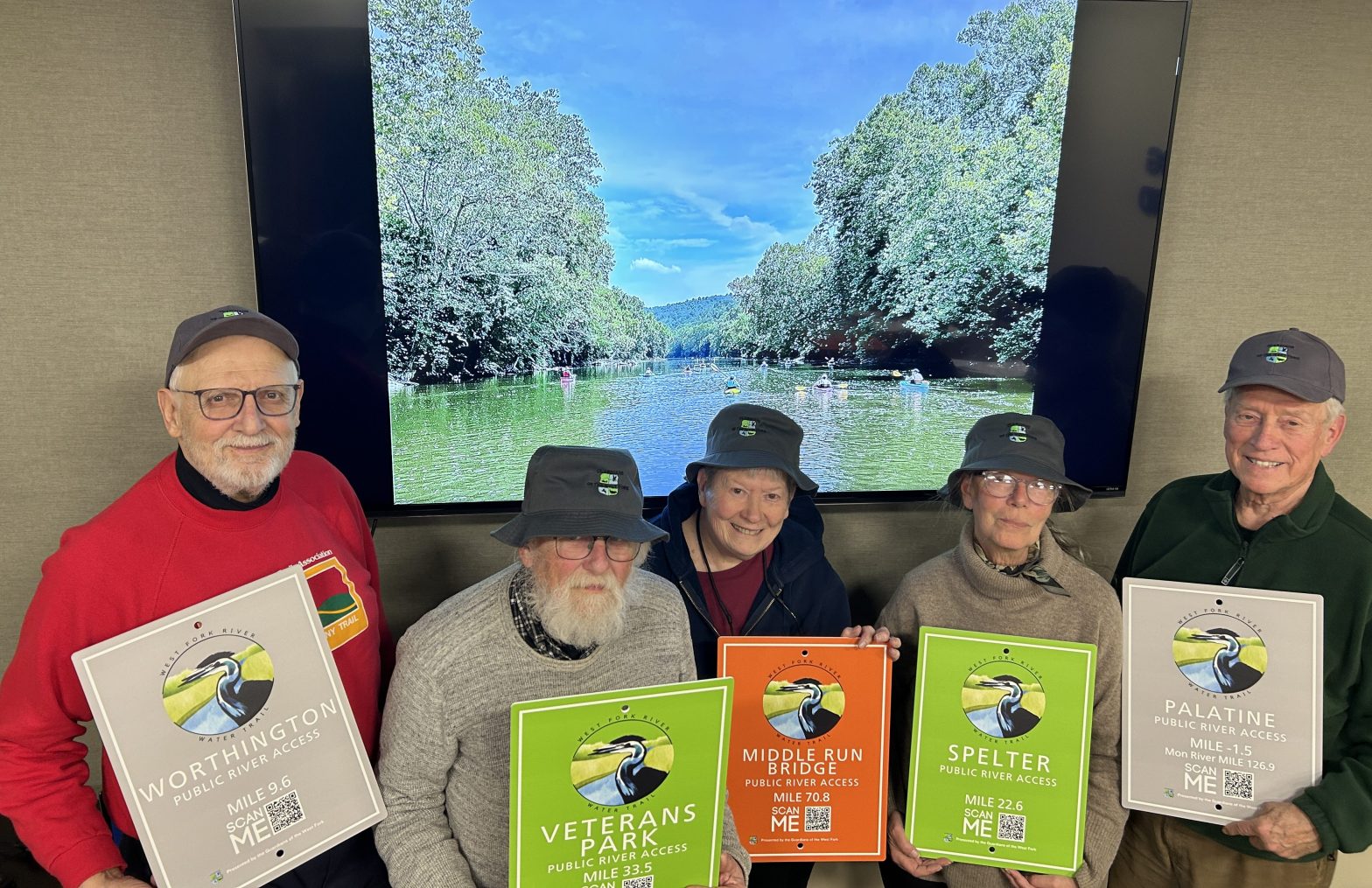
The goal of the Guardians of the West Fork is to watch over the watershed and keep its waters safe for all the life in our watershed – plants, animals, and people – and for enjoyment of our people – fishing, swimming, paddling, and just observing. Organized in 1997, and incorporated as a non-profit in 2002, the Guardians have maintained an ongoing project on Lambert Run in northern Harrison County to mitigate abandoned mine drainage since then. In 2014, the Guardians organized the West Fork Water Trail, which is part of the statewide Flatwater Paddling project, and in 2018 started the annual Float the Fork paddle. in 2023, they started a weekly paddle on the West Fork at Veteran’s Memorial Park during the spring and summer.



 Guardians of the West Fork Watershed