The Guardians Board will meet at 6:30 p.m. Wednesday, 20 September 2023 at the Clarksburg Water Board and on Google Meet. This month is a great opportunity to come meet the Board and members and learn about our work.
At 7:00, Martin Christ, WVDEP Northern Basin Coordinator, will give us an overview of the health of the watershed, what and where the major problems are, projects done by the Guardians over the years, projects prior, ongoing, and prospective by others (dam removal, mining mitigation, Conservation District projects, superfund cleanups), what monitoring is being done, and our relationship with DEP, and what other state and federal agencies have what responsibilities and interests, and other organizations.
There will be time for questions, and refreshments and conversation following the program.
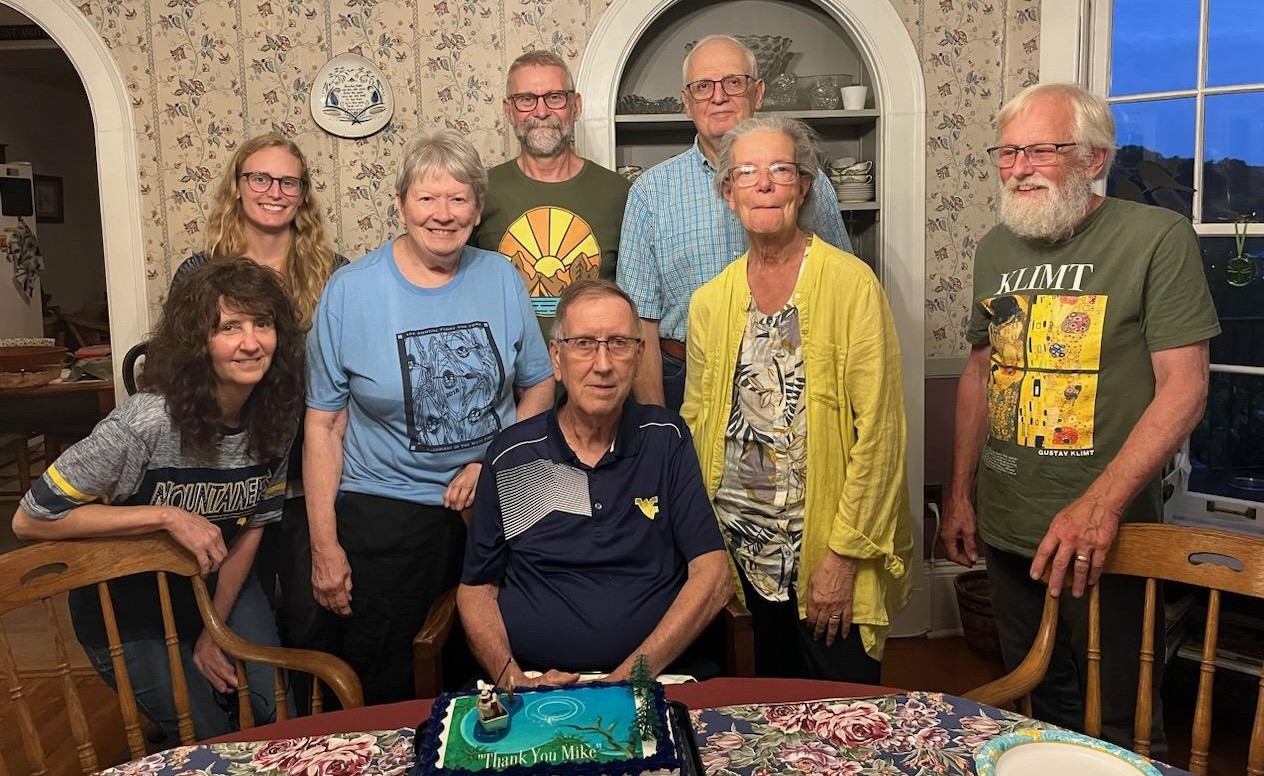
Guardians board members and supporters gathered last week for a potluck dinner to celebrate the retirement of Mike Murphy from the board of directors.
Mike has been an integral member of the Guardians for nearly 20 years! From collecting water samples to mowing and maintaining river access points, Mike has dedicated countless hours to restore and protect the West Fork.
Mike has an unparalleled love for the West Fork, having fished and spent time on nearly every section of the river since the 1970’s. Mike says its the sights and sounds of the river that call to him. He especially loves seeing the great blue herons, kingfishers, eagles, and listening to the chortle of red bellied woodpeckers.
Mike, thank you for sharing your extensive knowledge and love of the West Fork. The Guardians, the West Fork River, and all the critters sincerely thank you for your dedicated service.
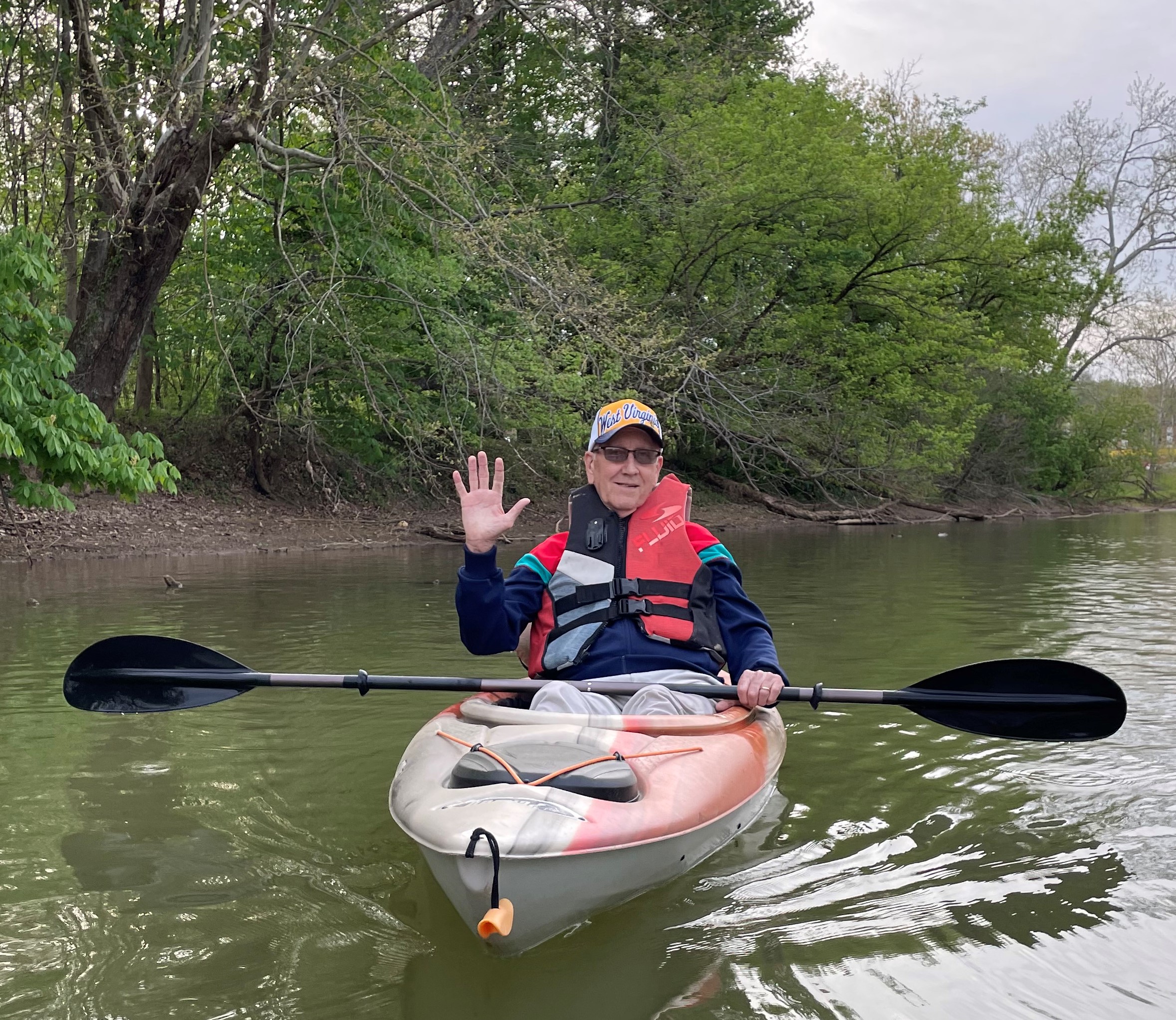
Mike Murphy paddling on the West Fork River near Clarksburg VA Park in April 2023.
Want to get involved and volunteer with the Guardians of the West Fork? We are always looking to add more river-lovers to our team! Email admin@guardiansofthewestfork.org to share your interests.
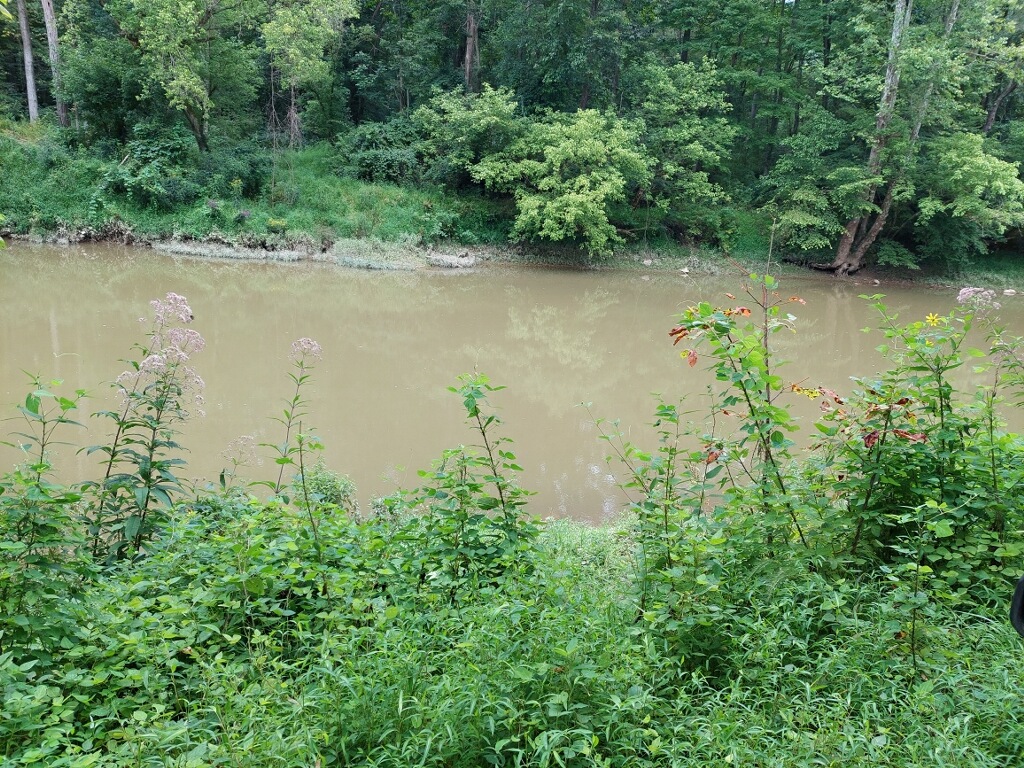
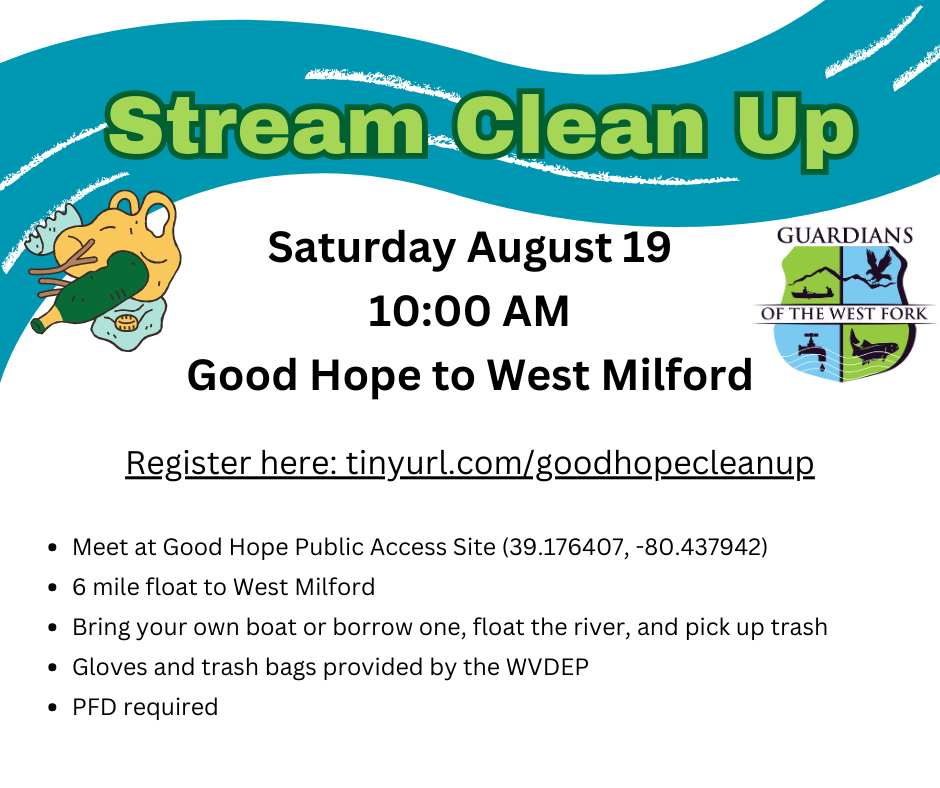
Unfortunately, we have decided to cancel the stream clean up scheduled for this Saturday August 19th. The river is running high and murky due to recent rains. It is difficult and unsafe to remove trash when the river is not clear.
Are you looking for an opportunity to get involved with your local river? Or perhaps you’ve floated the West Fork before and noticed tires and other debris?
Join us for a stream clean up this Saturday August 19th starting at 10AM at Good Hope Public Access Site (39.176407, -80.437942). We will float and pick up trash along a 6 mile segment to West Milford Public Access.
Bring your own boat or borrow one of ours! We will provide trash bags and gloves courtesy of the WVDEP REAP program.
The Guardians meeting this month will be a potluck celebration of Mike Murphy, retiring long-time Board member. Congratulations on your long service, Mike!
We will not be meeting at the Water Board this month. If you are interested and not on the email list, email admin@guardiansofthewestfork.org for directions. If you would like to participate online, email and we will set up a Google Meet.
Join us for a stream clean up on a 6 mile segment from Good Hope to West Milford! Picking up trash along the river not only improves the physical appearance of the stream but helps restore the natural integrity. The aquatic critters thank you for helping clean up their home!
We will meet at 10 AM at the Good Hope Public Access Site off Rt. 19 south of West Milford. The public access site is behind Hawks Nest Convenience Store
We will provide trash bags, gloves, and trash grabbers. You are welcome to bring your own boat, but we will also have canoes available to use. Life jacket and whistle are required for each boat and individual.
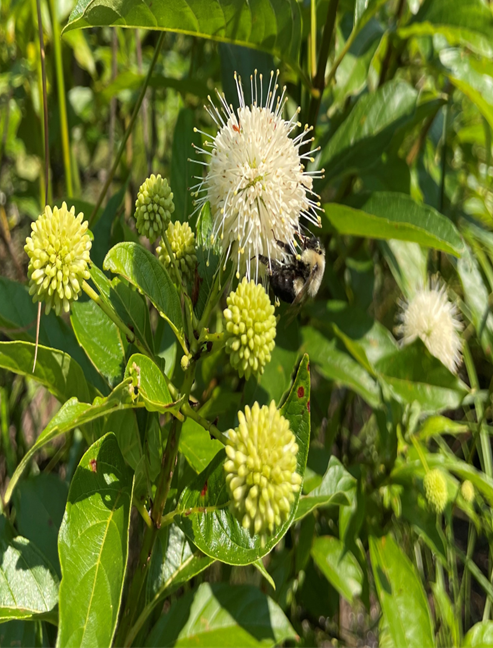
Have you noticed any round, white flowers blooming along the West Fork?
In mid to late summer, buttonbush blooms distinct creamy white ball-shaped flowers. Even into late fall and winter, these seed balls can still be easily recognized.
Buttonbush is a common shrub found in wet areas near streams and in wetlands.
Numerous types of wildlife rely on buttonbush: Ducks and other water birds consume their seeds. The fragrant flowers attract pollinators such as butterflies and moths. Wood ducks use the shrub limbs for nesting.
Not only is Buttonbush great for wildlife, but it also helps preserve water quality by stabilizing stream banks.
Buttonbush is also a great shrub to plant in your rain garden.
Buttonbush seed in late fall after the first frost.
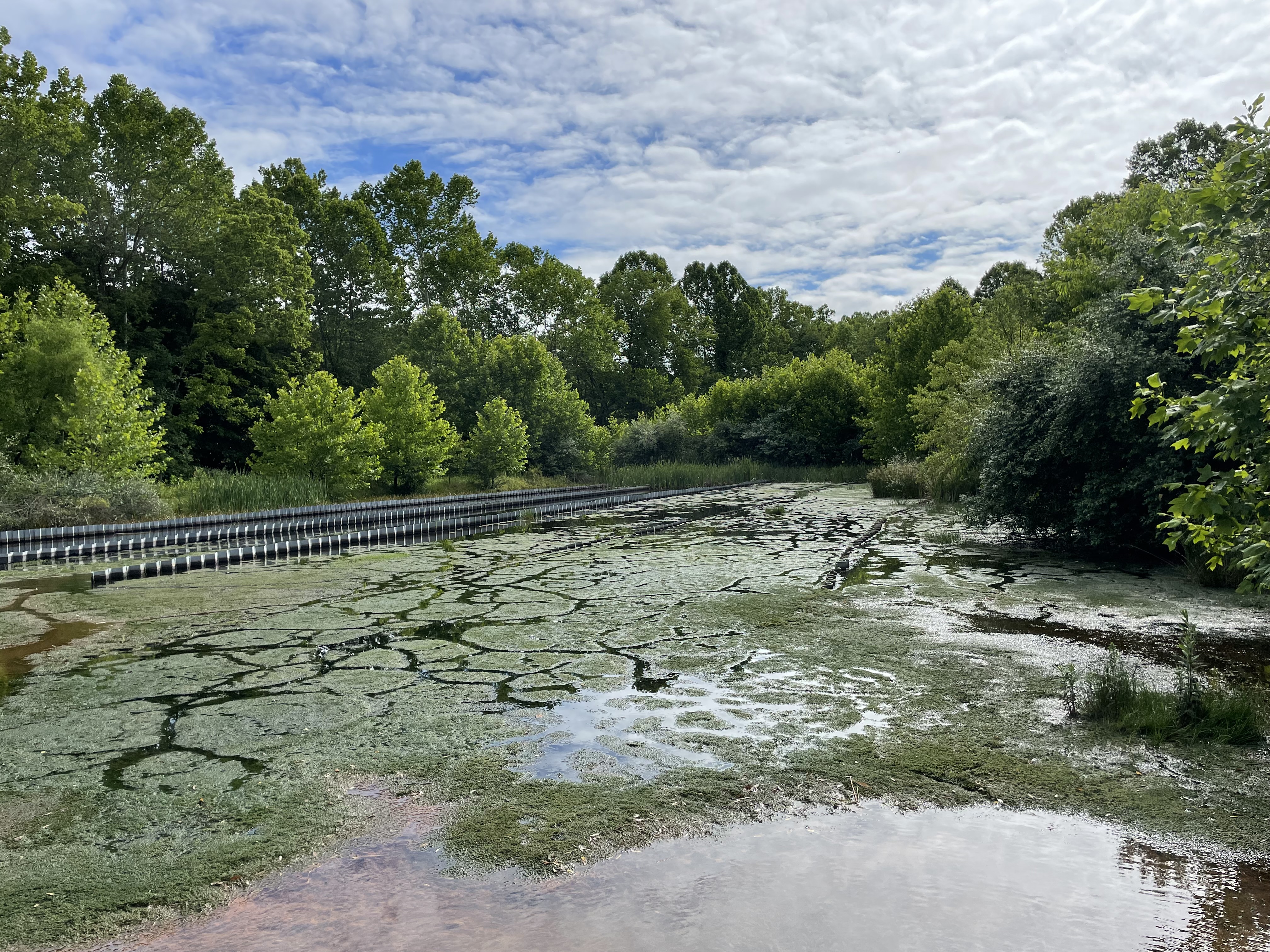
Impaired water flows into a constructed wetland designed to improve water quality.
Water is our most precious resource. Water sustains all live on Earth, and we can’t live without clean water.
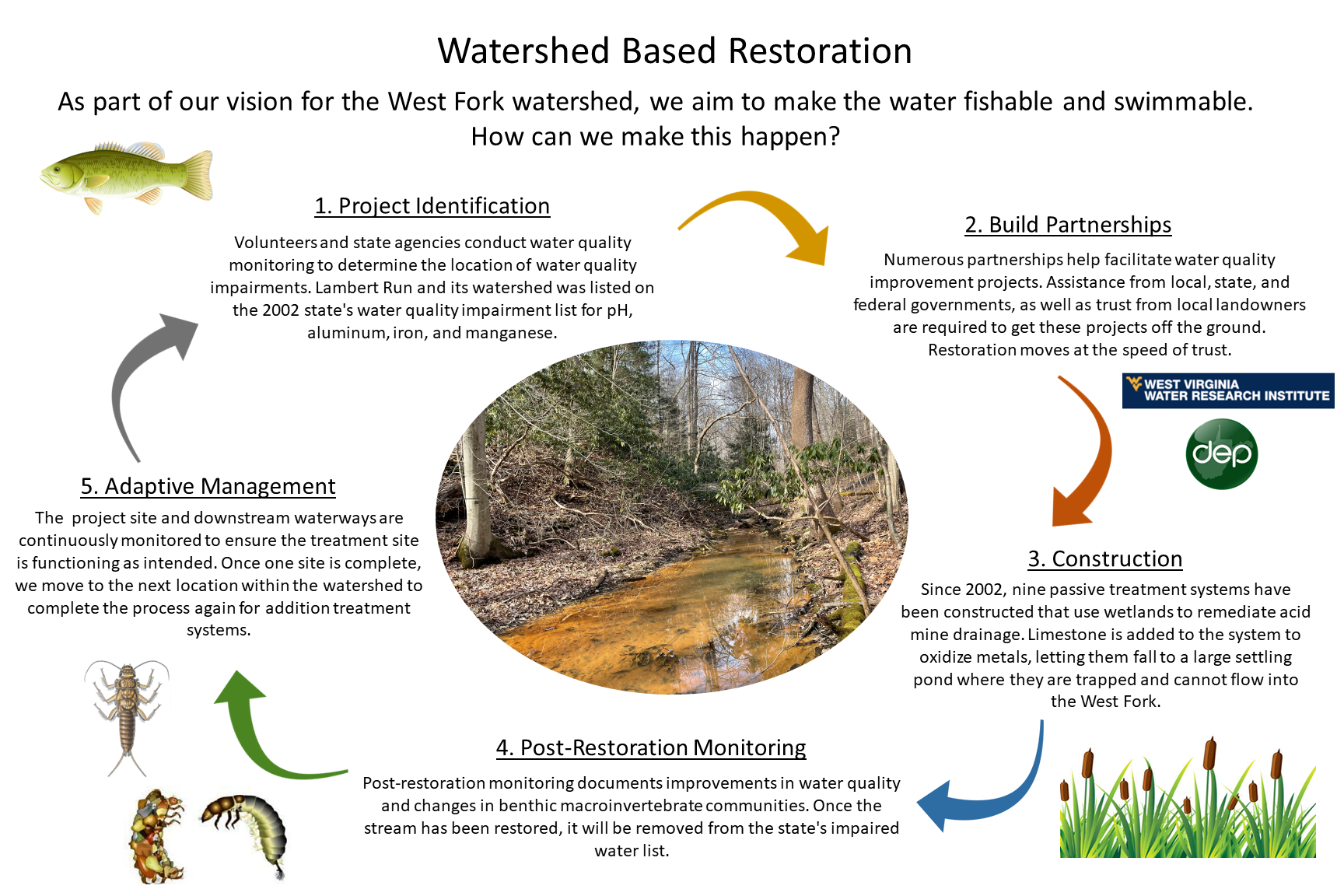
The Guardians of the West Fork, WVU Water Research Institute, WV Department of Environmental Protection, and other partners have worked to improve water quality in the West Fork watershed for over two decades.
Acid mine drainage, or AMD, is an on-going threat to water quality in our watershed. AMD describes polluted water that seeps out from mines. During mining, water comes into contact and transports heavy metals such as iron, aluminum, and magnesium. The metals change the color of the water, oftentimes displaying orange, milky white, or aquamarine blue discoloration.
Treating AMD before it enters the West Fork mainstem is a high priority.
AMD remediation projects divert impaired water through a network of constructed wetlands to slow the flow, allowing suspended metals to drop out of the water and settle at the bottom of the pond.
How are these AMD projects constructed? Through partnership, planning, and volunteer efforts.
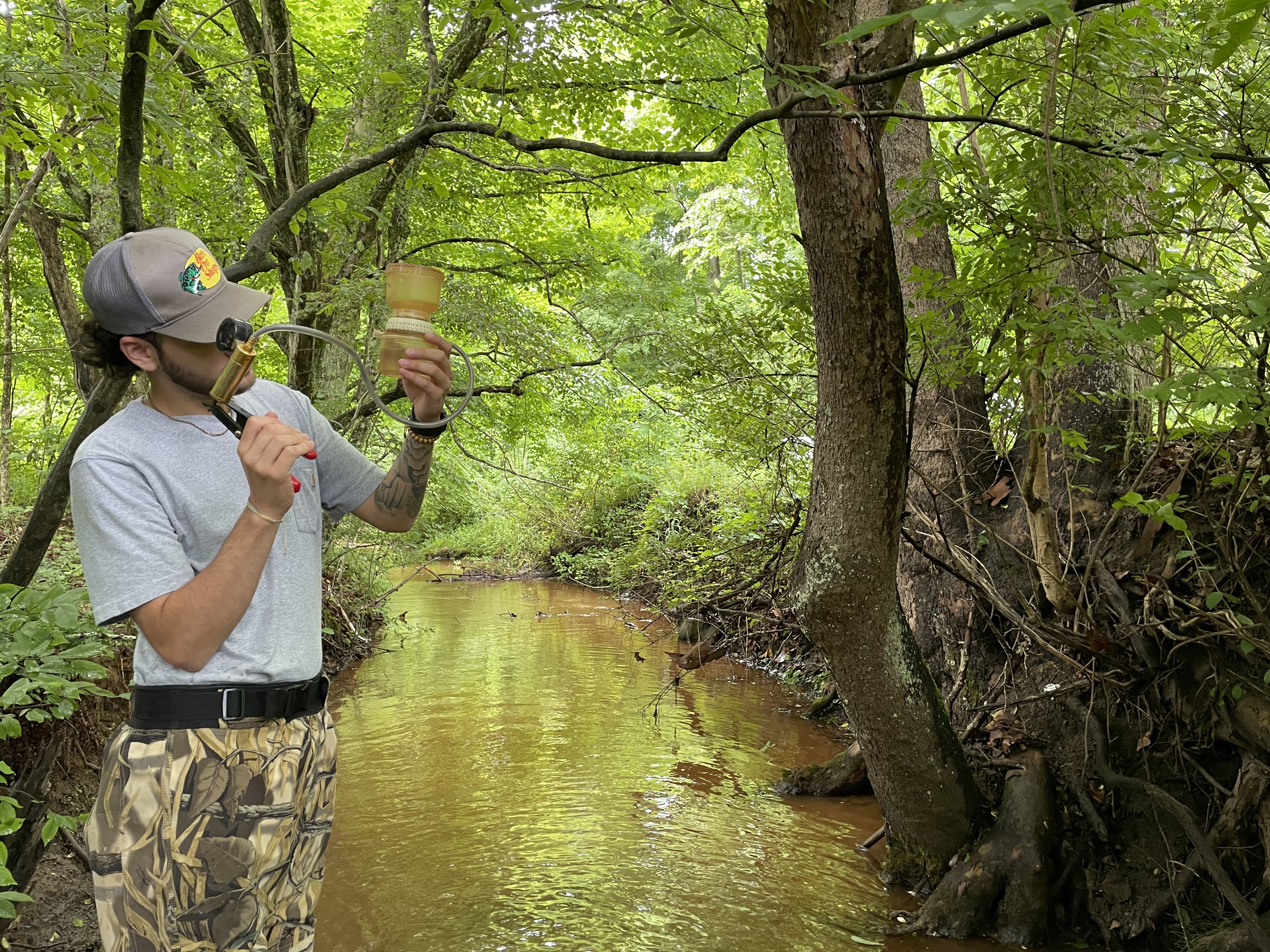
Identifying impaired streams require water samples to be collected and analyzed.
WVU Water Research Institute staff member filters a water sample that will be sent to a lab for analysis.
Field work also involves estimating the flow of the water. Knowing how fast the water flows allows us to estimate the impact of impaired waters within a watershed.
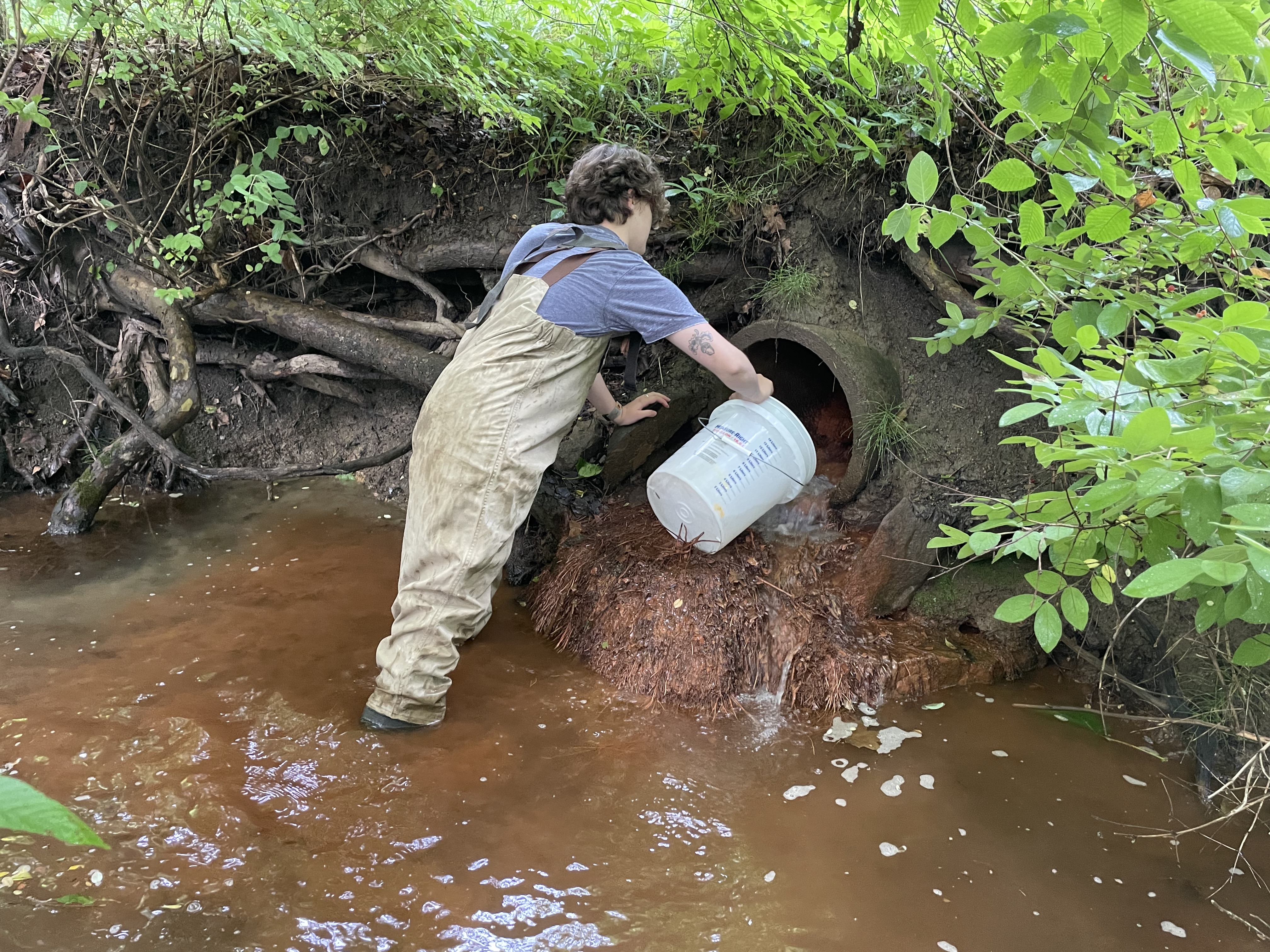
WVU Water Research Institute staff member estimates the flow of a small tributary using the stopwatch and bucket method.
After identifying an impaired stream, our partner organizations work together to design, fund, and construct the project. After construction, these projects need post-restoration monitoring to ensure the wetland is functioning as intended.
The goal is to improve water quality so we can ensure the West Fork River remains fishable, swimmable, and drinkable for future generations.
Constructed wetlands are designed to slow the flow of water to improve water quality.
Thank you to our partners and volunteers for dedicating your time and energy to improving the water quality of West Fork.
Have you ever spent time along a river and noticed how most rivers change along their course? Oftentimes, rivers display alternating patterns of calm flatwater and turbulent faster moving water.
This pattern is not by accident.
Learning to read the river can help you navigate the channel while paddling, or help you know where to cast your line to catch your next fish.
For most of its course, the West Fork lazily meanders through the landscape. The river is sinuous, with large bends and curves where the water is deep and slow. These areas are known as pools.
Riffles are the opposite of pools. Here, the water is shallow and fast moving. Riffles form when larger rocks gather and accumulate, forcing water to flow over them and creating more turbulent movement.
It’s not just about the water. The creatures that live beneath the water’s surface respond to these physical changes. In riffle areas, stream bugs known as benthic macroinvertebrates cling to the rocks, where as fish typically find refuge in deep pools.
One of the most notable sections that displays the alternating pattern of riffle and pools is from Weston to Jackson’s Mill. This 5.5 mile section float offers an exceptional display of the West Fork’s riffle & pool pattern.
The put-in is near the Trans-Allegheny Lunatic Asylum, just downstream of the Weston Dam. While there is no boat ramp, there is public parking (39.036797, -80.470335). The take-out is at Jackson’s Mill and has a paved concrete boat ramp (39.095907, -80.465556).
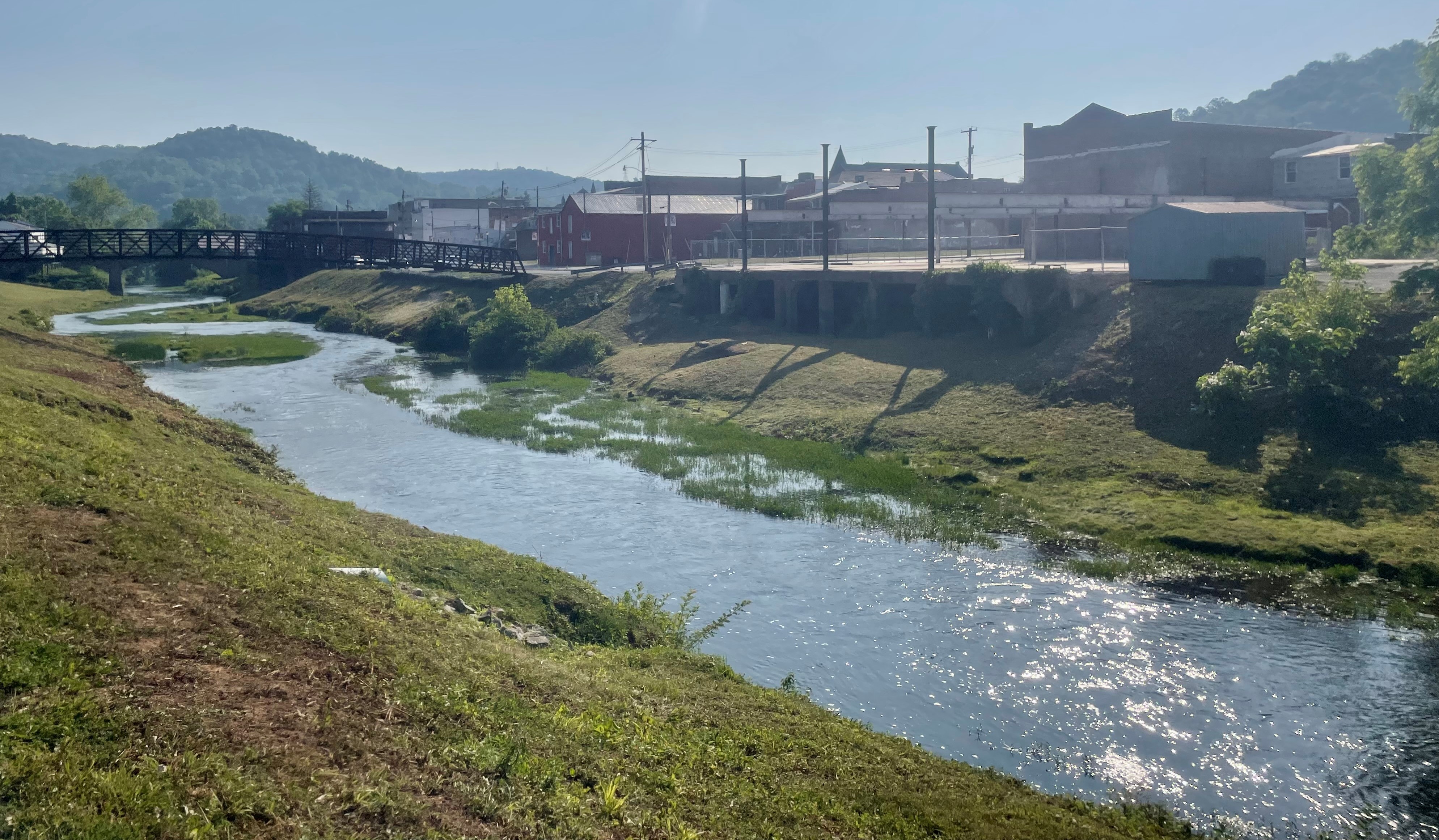
The West Fork River flows through Weston near the Trans-Allegheny Lunatic Asylum.
At the put in, the water flows quickly as you float through Weston. After a half mile, the river deepens and slows as you float through a more rural section. Towards the take out, the water picks up speed again as it flows through a riffle section near Jackson’s Mill.
Next time you float on the West Fork, be sure to admire the riffle and pool personality of the river.
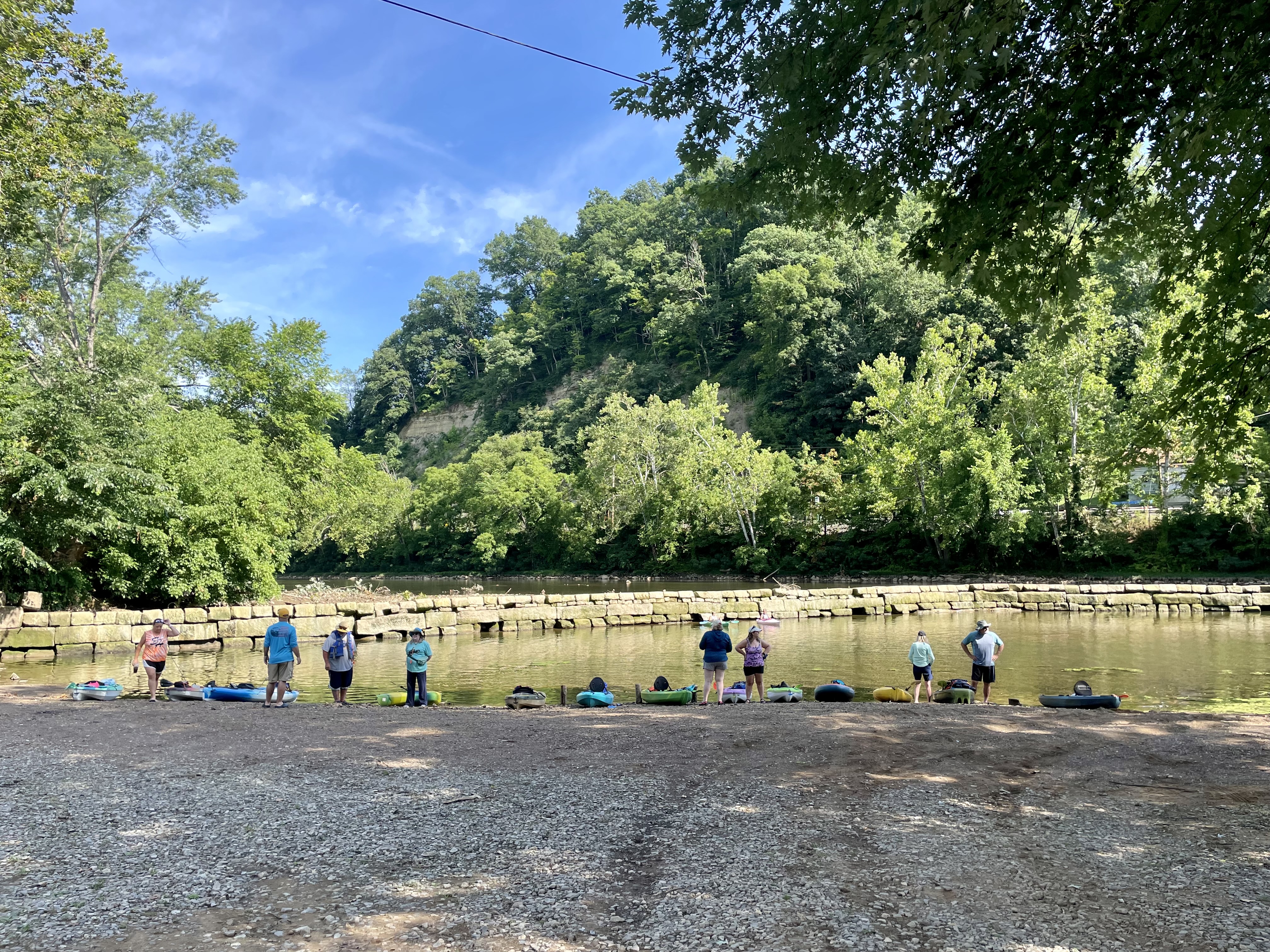
Thank you to everyone that joined us on Saturday for a float from Worthington to Monongah. We had 17 floaters from Fairmont, Morgantown, Clarksburg, Lost Creek, and Jane Lew join us.
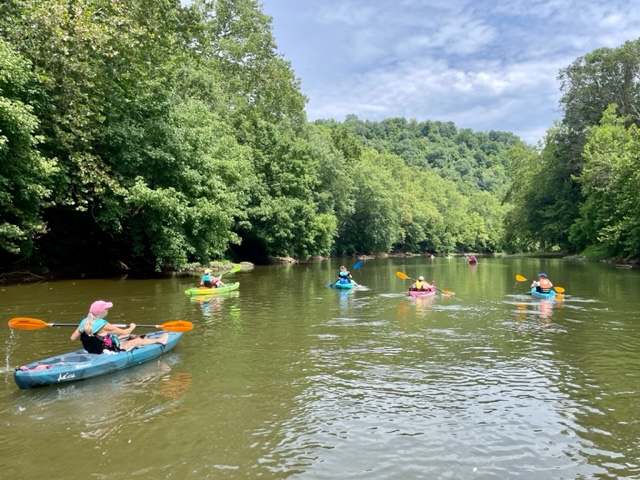
Floaters prepare to launch at Worthington City Park below the Worthington Dam.
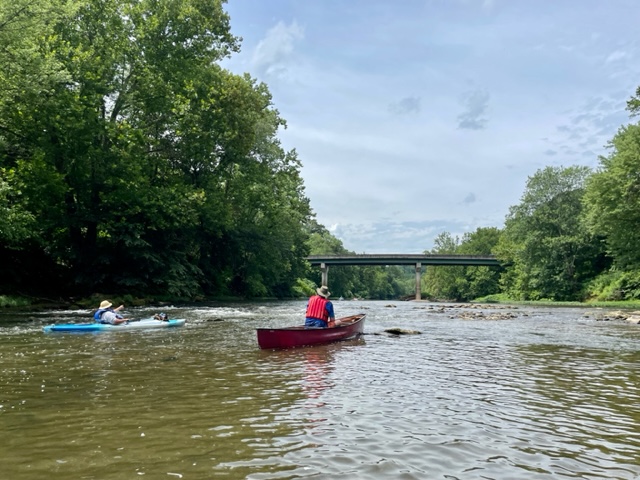
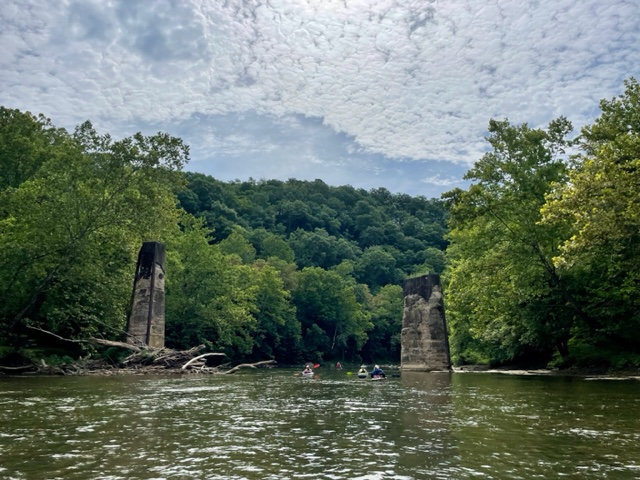
We had beautiful weather as we took in the sights and sounds along the West Fork.
The first half of the float takes paddlers through a large horseshoe bend. While most of the river is slow and deep, there are a few section of faster flowing riffles.
Floaters giving directions to other paddlers.
Interested in floating Worthington to Monongah? Check out the trip details below.
Trip Details
Distance: 5 miles
Duration: 2 – 4 hours (+/- depending on paddling pace and water levels)
Difficulty: beginner friendly flatwater interspersed with short rifles
Put-In: Worthington City Park (39.450509, -80.265246)
Take-Out: Monongah Public Access Site (39.460533, -80.215734)





 Guardians of the West Fork Watershed